
原载 CCS Chemistry 2026年第11期,8卷,5239–5241页
Know Thyself
医学的分子时代——认识你自己
“The proper study of Mankind is Man.”
— Alexander Pope, An Essay on Man (1733)
For centuries, science has looked outward. We have tried to reach for the farthest galaxies, to peer into the smallest subatomic particles, and to map the most remote corners of the planet. We have split the atom and sequenced the genome. And yet the subject about which our understanding remains the most limited sits quietly between our own two ears: the human being himself — and the molecular machinery that gives rise to life, thought, disease, and health. From the herbal trials of Shennong to the dissections of Galen, humanity has never stopped trying to understand itself; even so, compared with our knowledge of the cosmos, of matter, and of machines, our understanding of the human body remains the most limited —and the least supported by rigorous science.
几个世纪以来,科学不断向外探索:遥望浩瀚宇宙深处的星系,探寻微观世界的亚原子粒子,踏足地球上人迹罕至的角落。我们实现了核裂变,完成了人类基因组测序。然而,离我们最近、却仍有无数奥秘亟待揭示的研究对象,恰恰是我们自己——一个知之甚少的研究对象,仍静静存在于我们的双耳之间:一部支撑生命活动、思维意识、疾病发生与健康维持的复杂的人体分子体系。从神农尝百草到盖伦解剖人体,人类对自身的探索从未停歇。尽管现代生物医学已取得令人瞩目的成就,但人体这一复杂生命系统如何协调运作、如何维持健康,又为何发生疾病,仍有许多根本性的科学问题亟待回答。
I have spent my career as a molecular scientist, and over the past two decades I have become more and more convinced that the most important frontier for chemistry, and for molecular science in general, is not out there in the distant cosmos. It is in here —inside the living cell, inside the human body. It is time for chemists to turn our instruments, our imaginations, and our sense of mission toward the molecular basis of life and human health.
作为一名分子科学家,我始终致力于探索分子世界的奥秘。过去二十年来,我愈发确信:化学乃至整个分子科学最重要的前沿,不在遥远的宇宙深处,而在我们自身——在鲜活的细胞之中,在人体之内。如今,正是化学家将科学探索的目光,精密的研究工具与创造性的想象力更多地投向生命与健康的分子基础之时。
Two and a half thousand years ago, the Temple of Apollo at Delphi bore the injunction gnothi seauton —“know thyself. ” For most of history, this was the task of philosophers and healers. Today it has become, in no small measure, a molecular problem: what is the human body, viewed at sufficient resolution, but a stupendously complex yet exquisitely integrated molecular machine, whose countless molecules —proteins, nucleic acids, glycans, lipids, metabolites, and metal ions —move in concert from a single neural firing to the steady rhythm of a beating heart? To read that machine, to understand its parts, its wiring, and its failures at the molecular level, is the defining challenge of our time [Figure 1]. The ancient maxim has thus acquired a new and concrete meaning: to know thyself at the molecular level.
两千五百年前,希腊德尔斐的阿波罗神庙镌刻着一句箴言:gnothi seauton,意为“认识你自己”。在漫长的人类历史中,认识自我主要是哲学家和医者的使命。如今,这一古老命题被赋予了新的科学内涵:如果从分子尺度审视人体,我们究竟是什么?人体是一台高度复杂而精妙协同的分子机器。数以万亿计的蛋白质、核酸、聚糖、脂质、代谢物和金属离子等分子组分,通过精密的识别,相互作用与动态调控,共同支撑着生命活动——从单个神经元放电到心脏的持续搏动。如何从分子层面解析这一复杂系统,理解其组成、相互作用及运行规律,并揭示其功能失调与疾病发生的分子机制,是当代生命科学与医学面临的重大挑战 [图1]。于是,古老的箴言有了全新的科学内涵和时代意义:从分子层面认识自我。
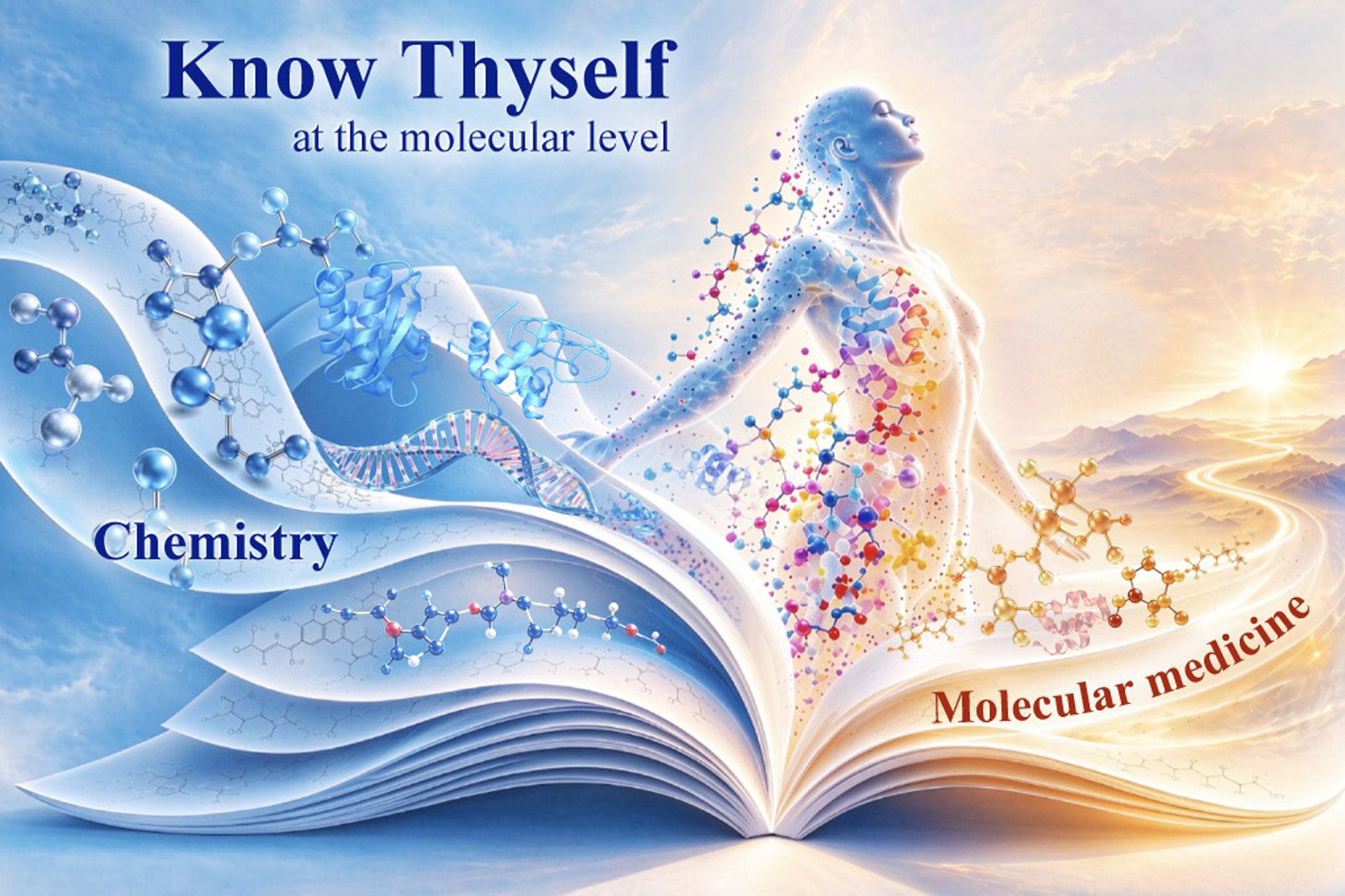
Figure 1 | Life is a book of molecules. Chemistry enables us to read its language and gives us the power to rewrite its story, ushering in the molecular age of medicine.
图1. 生命是一部分子之书。化学让我们读懂其分子语言,也赋予我们改写生命篇章的能力,开启分子医学时代。
Molecular science no longer lives in isolation. The molecules we design, synthesize, measure, and manipulate now permeate every corner of modern society: they power batteries and solar cells, form the materials of flexible electronics, catalyze the reactions that underpin industry, and encode information in ways no one could have imagined a generation ago. This is a source of pride, and it is also a reminder of responsibility. Of all the domains into which molecular science is now advancing, none carries a more urgent human stake than life and health. And among all the sciences converging upon medicine, chemistry holds a unique power: it does not merely observe and measure life —it can create, design, and intervene. The capacity to synthesize a new molecule, to tailor its recognition, and to direct its behavior is precisely what molecular medicine now needs.
如今,分子科学早已走出实验室。我们所设计、合成、测量和操控的分子已进入现代社会的方方面面,为电池和太阳能电池提供能量,构筑柔性电子器件,催化工业反应,并以往昔难以想象的方式存储和编码信息。这既令人自豪,也意味着责任。在分子科学不断拓展的诸多前沿中,没有哪个领域比生命健康更为迫切、更关乎人类福祉。在医学相关的各学科中,化学具有独特优势:它不仅能观察和测量生命,还能设计、创造分子,主动干预生命过程。创造具有特定结构与功能的分子、赋予其精准识别能力,并调控其在生命体系中的作用,正是分子医学迫切需要的化学力量。
This is why, for more than two decades, I have devoted my own laboratory —and, as an associate editor, my own platform—to what I call molecular medicine: the effort to understand life, and to diagnose, treat, and prevent diseases, at the molecular level. Molecular medicine is not a subdiscipline borrowed from biology or medicine. It is a conviction: that the phenomena we care most about — how a cell decides to divide or to die, how a protein misfolds, how a pathogen invades a host, how a drug reaches its target, how the brain represents a thought — are ultimately molecular events. If we wish to intervene in them with precision, we must first learn to see, to measure, and to manipulate them as molecules. Some may object that the term is hardly new, and they are right: molecular medicine, in various guises, has been spoken of in biomedical circles for decades. But what we mean today is not a rebranding of an old idea. It is the molecular age of medicine —an age in which the scale of molecular knowledge, the power of our tools, and the breadth of our ambition are qualitatively different from anything that has come before, and in which chemists, for the first time, sit at the very center of the enterprise.
因此,二十多年来,我的实验室始终致力于分子医学研究。作为CCS Chemistry 的副主编,我也希望推动这一方向的学术交流与发展。所谓分子医学,就是从分子层面认识生命,理解疾病、守护健康。它不应被简单理解为生物学或医学的分支,更代表一种研究理念:一切生命现象——细胞的分裂或死亡、蛋白质的错误折叠、病原体对宿主的侵袭、药物对靶点的作用,乃至大脑对思想的表征——归根结底都是分子事件。要精准干预这些过程,就必须从分子层面观察、测量和操控它们。有人或许会说,“分子医学”并非新概念。的确,数十年来,生物医学界一直在从不同角度探讨这一领域。但今天所倡导的,并非旧概念的简单翻新,而是迈向“医学的分子时代”。在这一时代,人类对分子的认知不断深化,研究工具的能力实现跨越式提升,科学探索的广度与深度也达到前所未有的水平。化学将在这一历史进程中发挥愈加重要的核心作用。
This lineage is worth remembering. Nearly 80 years ago, in 1949, Linus Pauling —twice a Nobel laureate, and one of the founding fathers of the chemical bond — coined the term “molecular disease ” in a now-classic paper in Science on sickle cell anemia. Pauling and his colleagues demonstrated that this devastating blood disorder was associated with an abnormal form of hemoglobin. The specific molecular lesion was later identified by Vernon Ingram as a single amino-acid substitution in the β-globin chain, which underlies the sickling of red blood cells. It was a revolutionary insight: disease, at root, is molecular. Nearly eight decades later, that seed has grown into the far larger enterprise of molecular medicine. Pauling showed that one disease could be read, and ultimately attacked, at the level of a single molecule; our ambition today is larger —to read the whole of human health, disease, and response to therapy at the same molecular level, and to do so at the scale of an entire molecular age.
回顾分子医学的发展脉络,近八十年前的1949年,两度荣获诺贝尔奖的Linus Pauling及其同事在Science发表了一篇具有里程碑意义的论文,首次从血红蛋白的性质出发,揭示了镰刀型细胞贫血症与异常血红蛋白之间的联系,并提出了“分子疾病”(molecular disease)的概念。此后,弗农·英格拉姆(Vernon Ingram)进一步揭示了这一疾病的分子基础——β-珠蛋白链中单个氨基酸的替换。这一系列发现标志着人类对疾病的认识迈入了分子层面:疾病不仅表现为器官和组织的异常,其发生发展更有着深刻的分子基础。近八十年后的今天,这一开创性的科学思想已孕育出蓬勃发展的分子医学。从揭示单一疾病的分子基础,到系统解析健康与疾病的分子网络,再到理解并预测个体对治疗的不同应答,分子医学正不断拓展我们认识生命、理解疾病和精准干预的科学边界。
The frontier of chemistry is thus shifting. For most of its history, chemistry has been the science of making molecules—designing, synthesizing, and characterizing new structures with ever greater precision. That remains our great strength and our deepest source of joy. But in the century of biology and medicine that is now unfolding, the most consequential frontier of chemistry will be defined less by the molecules we create in the flask than by what we can understand, predict, and control about how molecules behave inside the vastly more complex environment of living systems. A molecule is not merely a structure; it is a participant. Life itself is also a source of new chemistry. By understanding and reengineering nature’s molecular machinery, we can discover new reactions and create molecular functions beyond those found in nature. 1,2 To understand a molecule is to know its partners, its context, and its consequences in the chemical theater of the cell; to practice chemistry in the age of medicine is to move from making molecules to guiding them.
化学研究的前沿正由此不断拓展。在漫长的发展历程中,化学以创造分子见长,通过不断发展的设计、合成与表征方法,持续拓展人类认识和创造物质的能力,这始终是化学的核心优势,也是其独特魅力所在。如今,随着生命科学与医学的迅速发展,化学正在进入一个更加广阔的研究天地:我们不仅要关注能够创造什么分子,更需要理解这些分子如何在复杂的生命体系中相互识别、发生反应并发挥功能,以及如何预测并调控这些过程。与此同时,生命本身也为化学创新提供了丰富的灵感与机遇。通过揭示天然分子机器的工作机制,并对其进行设计改造,化学家不仅能够发现新的生化反应,还能够创造超越自然界已有的分子功能。[1,2] 因此,理解一个分子,不仅要认识它的结构,更要理解它与其他分子的相互作用,所处的生物学环境及其产生的功能效应。在医学的分子时代,化学正从创造分子进一步走向理解分子、调控分子,并最终实现对生命过程的精准分子干预。
The central question of our era, in my view, is therefore this: How do the recognition events, the reactions, the interactions, and the dynamic operations among molecules in a living system give rise to health, to disease, and ultimately to the cognitive and behavioral capacities that make us human? We are, even now, astonishingly far from an answer. We can sequence a genome in a few hours, yet we cannot fully predict how a single misfolded protein will trigger a neurodegenerative disease. We can image a tumor with exquisite resolution, yet we cannot always explain, at the molecular level, why one patient responds to a therapy and another does not. The human body remains the least understood complex system in all of science.
在我看来,当今时代的核心问题是:生命体系中复杂的分子识别、化学反应、相互作用及动态调控过程,如何共同维系健康、参与疾病发生,并最终赋予人类独特的认知与行为能力?我们距离答案仍很遥远。如今,基因组测序可在数小时内完成,却仍难以充分预测一个错误折叠的蛋白质如何引发神经退行性疾病;肿瘤成像已达极高分辨率,却仍无法从分子层面充分解释不同患者为何对同一种治疗产生迥异的应答。人体是科学所面对的最复杂、也远未被充分理解的系统之一。
That picture is beginning to change. We now live at a historical moment when artificial intelligence, large-scale data, single-molecule measurement, high-resolution imaging, and multiomics are converging. Consider only the past decade. AlphaFold and its successors showed that machine intelligence can predict protein structures from sequence alone—a problem that had resisted solution for half a century and earned its architects the 2024 Nobel Prize in Chemistry. Single-cell and spatial omics now let us read the molecular states of individual cells within their native tissues, revealing the heterogeneity hidden behind every averaged measurement. And nucleic-acid therapeutics—from messenger RNA vaccines validated at global scale to short interfering RNAs and aptamer-based drugs —have demonstrated that we can not only read biology but reprogram it with designed molecules. Each of these advances began in a different discipline; their power emerges precisely because they now converge. When artificial intelligence or super intelligence, single-molecule measurement, high-resolution imaging, and multiomics meet, we are for the first time able to read the human body not as a collection of symptoms and organs but as an integrated molecular system —to see a disease at the moment it first emerges as an aberrant molecular pattern, long before a symptom appears, and to intervene with tools that are specific, measurable, and humane. This is not a distant vision. It is happening now, in laboratories and clinics around the world.
令人振奋的是,这一局面正在发生改变。我们正处在一个人工智能、大规模数据、单分子测量、高分辨成像和多组学技术加速融合的时代。回望过去十年,以AlphaFold为代表的人工智能能够依据氨基酸序列预测蛋白质的三维结构。这一突破性的进展使德米斯·哈萨比斯(Demis Hassabis)与约翰·江珀(John Jumper)因蛋白质结构预测,与因计算蛋白质设计作出贡献的大卫·贝克(David Baker)共同获得2024年诺贝尔化学奖。与此同时,单细胞和空间组学技术使我们可以在组织的空间背景下解析细胞的分子状态,揭示传统整体测量结果难以捕捉的细胞异质性。核酸药物的快速发展——从广泛应用的mRNA疫苗,到小干扰RNA药物及不断探索的核酸适体治疗策略进一步证明,我们不仅能解读生命的分子信息,还能通过分子的准确设计对其进行精准调控。这些进展源于不同学科,而其潜力恰恰在交汇中进一步释放。当人工智能、单分子测量、高分辨率成像和多组学技术相结合,我们便有望不再只从器官和症状的层面认识人体,而是逐步将其解析为一个动态、相互联系的分子系统。未来,我们期望在临床症状出现之前,识别疾病早期的分子异常,并发展更加精准、可量化、以患者为中心的诊断与干预策略。这一愿景并非全然遥不可及——它正在世界各地实验室和临床实践中逐步成为现实。
For us as molecular scientists, this convergence is not an opportunity to watch from the sidelines. It is a call to join. The methods we have spent decades refining—molecular recognition, molecular design, chemical synthesis, single-molecule detection, functional nucleic acids, molecular imaging probes —are precisely the methods that molecular medicine now needs. The challenges of medicine offer not only opportunities to apply existing chemical tools, but also inspiration for new questions and discoveries in chemistry. 3,4 Biologists and physicians will tell you, frankly, that the hard problems ahead cannot be solved by any single field. They require chemists who understand cells, physicists who understand molecules, and engineers who are unafraid of clinical reality.
对于分子科学研究者而言,这种学科汇聚不是静观其变的机遇,而是主动参与的召唤。数十年不断发展的分子识别、分子设计、化学合成、单分子检测、功能核酸和分子成像探针等方法,正是分子医学发展所需要的重要工具。与此同时,医学难题并非只是已有化学工具的应用场景,也不断提出新的科学问题、激发新的化学概念、反应与方法[3,4]。生物学家和临床医生深知,未来的重大难题无法由任何单一学科独立解决,他们需要理解细胞行为的化学家、理解分子的物理学家、以及敢于直面临床现实需求的工程师。
I say this from personal experience —and my own path has traced, step by step, the arc from molecular recognition to molecular medicine. Trained as a physical chemist, I spent my early career fascinated by molecular recognition: how a designed molecular probe could find and report a single target in a complex mixture. That led my group to develop fluorescent probes and molecular beacons for real-time detection of biomolecules, and later to cell-SELEX, a technique that screens nucleic acid aptamers directly against living cells, selecting DNA or RNA molecules that recognize the surfaces of cancer cells with high specificity, and, most recently, to SPARK-Seq — a revolution leading toward aptamer data science. Aptamers—sometimes called “scientist’s antibodies ”— then carried our work from the flask toward the clinic, finding use in tumor imaging, targeted delivery, and molecular diagnostics. When I first turned my attention, as a chemist, toward biological and medical questions, I half-expected my scientific horizon to narrow. The opposite happened. The questions became deeper, the collaborations more rewarding, and the impact of our work became, for the first time, something I could explain to a neighbor or to a parent on a hospital visit. A molecular probe that lights up in a test tube is an elegant result; the same probe that helps detect a cancer biomarker at its earliest, most treatable stage is a different kind of achievement entirely. Embracing the life sciences and medicine did not dilute my identity as a molecular scientist—it enlarged it. I have watched the same thing happen to many talented students and colleagues: the moment a chemist walks into a hospital, into a biology lab, into a clinical conversation, their science gains a purpose that no grant number alone can supply. From molecular recognition, to molecular understanding, to molecular intervention, and finally to molecular medicine—this is the line along which modern chemistry is being drawn, and it is the line along which our most exciting discoveries will be made.
这些认知也来自我的亲身经历。我的科研之路,正是一段从分子识别逐步走向分子医学的历程。作为一名接受过物理化学训练的研究者,我在研究生涯早期便对分子识别深深着迷:如何让精心设计的分子探针,在复杂混合物准确识别特定靶标并产生可测量的信号?围绕这一问题,我们开发了用于生物实时检测的荧光探针与分子信标,继而发展了以活细胞为筛选对象的cell-SELEX技术,从而获得可高特异性识别肿瘤细胞表面靶标的DNA或RNA核酸适体。最近,团队进一步开发了SPARK-seq技术,将核酸适体介导的分子识别与测序读出相结合,推动研究迈向核酸适体数据科学的新阶段。核酸适体有时被形象称为“科学家的抗体”,也推动我们的研究从试管走向更广阔的医学应用,在肿瘤成像、靶向递送和分子诊断等领域展现潜力。最初,当我以化学家的身份转向生物学和医学问题时,曾担心科研视野会因此收窄。事实恰恰相反:科学问题变得更加深刻,合作带来的收获更加丰富,研究成果也获得了更容易向公众与患者解释的意义。一个能在试管中发出荧光的分子探针,体现了精巧的化学设计;而同一个探针若能帮助人们在癌症标志物出现的最早、最易治疗阶段将其检测出来,它便进一步承载了改善健康的可能。投身生命科学与医学研究,并没有削弱我作为分子科学研究者的身份,反而扩大了这一身份的内涵。我在许多优秀的学生和同事身上看到了同样的变化:当化学家走进医院、走进生物实验室,与临床工作者对话时,科学研究便获得了超越项目与经费本身的价值与使命感。从分子识别,到分子解析,再到分子干预,最终走向分子医学,这既是我个人的科研轨迹,也映照着现代化学不断拓展的发展脉络,更是未来最令人兴奋的科学前沿。
CCS Chemistry was founded, in part, to be a home for exactly this kind of boundary-crossing chemistry. From the journal’s earliest days, I have been privileged to help shape its editorial vision and to assemble its editorial board. I am proud of what we have built: a journal that does not regard “pure” chemistry and “medical” or “applied” chemistry as separate worlds, but recognizes that the most exciting molecular science of the twenty-first century will be done at the interfaces —between chemistry and biology, between chemistry and medicine, between chemistry and computation, and between the laboratory bench and the patient.
CCS Chemistry 的创办初衷之一,正是为跨越学科边界的化学研究提供交流与展示的平台。从创刊之初,我便有幸参与期刊愿景的规划及编委会组建。我为这本期刊深感自豪:它不将“纯”化学与“医学”或应用化学截然分开,而是相信,21世纪许多激动人心的分子科学的突破,将出现在化学与生物学、化学与医学、化学与计算科学,以及实验研究与临床实践的交汇处。
To the early-career scientist reading this: do not be afraid to walk through the door that leads from your own discipline toward life and health. You do not have to become a physician. You do not have to abandon the molecular science you love. What you do have to do is to ask, sooner rather than later: What is my molecule for? What human problem might it help solve? What new chemistry might be needed to solve it? The answers will make your science better, more exciting and attractive, not worse.
对正在阅读这篇社论的青年科研工作者,我想说:不要害怕走出自己的学科,迈向生命与健康这一领域。你不必成为一名医生,也不必放弃所热爱的分子科学,但不妨尽早思考:我所研究的分子能够解决什么问题?它能为哪一种生命健康需求带来新的答案?要实现这一目标,还需要哪些新的化学原理与方法?这些追问不会削弱研究的科学性,反而可能使科学问题更加深刻、研究方向更加开阔,探索过程更具吸引力,也更令人振奋。
To the more senior investigator: the hardest problems in biology and medicine are waiting for the rigor, the design sensibility, and the quantitative instinct that molecular science brings. We have a rare opportunity, right now, to help define the molecular age of medicine. It would be a shame to let it pass without us.
对资深科研工作者,我想说:生物学和医学领域最具挑战性的难题,正需要分子科学家所擅长的严谨分析、理性设计与定量分析能力。此时此刻,正迎来一个难得的机遇——参与塑造医学的分子时代,这样的机遇值得我们共同把握。
We human beings remain, as Pope reminded us nearly three centuries ago, the most interesting and the least understood subject of inquiry available to us. The instruments to know ourselves at the molecular level —to take up, at last, the Delphic injunction in the language of our own science—are now in our hands. And as we use them, we should recognize that this is not a one-way street: medicine poses new scientific questions to chemistry, and chemistry creates new molecular capabilities for medicine. Their convergence is not merely an interdisciplinary field; it may well be the wellspring of the next generation of molecular science. Let us enter it together —with rigor, with humility, and with the sense of purpose that only work in service of human health can bring.
正如英国诗人亚历山大·蒲柏(Alexander Pope)在近三百年前所言,在所有值得探究的对象中,人类本身最令人着迷却又最难懂。如今,从分子层面认识自身的科学工具,正在不断丰富我们的认知能力,使德尔斐的古老箴言获得新的实践路径。我们也认识到,化学与医学的关系从来不是单向的:医学不断向化学抛出新的科学问题,而化学则为医学创造新的分子工具与干预能力。二者的交汇,不只是学科之间的合作,更可能成为孕育下一代分子科学的重要源泉。让我们以严谨求实的态度、谦逊开放的精神,以及守护人类健康的使命,携手迈向医学的分子时代。
Prof. Dr. Weihong Tan
谭蔚泓 教授
Associate Editor
CCS Chemistry 副主编
中国科学院杭州医学研究所
E-mail: tan@hnu.edu.cn
Acknowledgments/致谢
I sincerely appreciate the help of many colleagues (Professor Qin Wu and others) for their suggestions to improve this editorial and for creating the figure.
我衷心感谢多位同事(吴芩教授,陈鹏教授,方晓红教授等人),感谢他们为完善这篇编者按提出的建议和修改。也谢谢吴芩教授协助绘制图件。
References/参考文献
1. Miller, D. C.; Athavale, S. V.; Arnold, F. H. Combining Chemistry and Protein Engineering for New-to-Nature Biocatalysis. Nat. Synth. 2022, 1, 18–23.
2. Arnold, F. H. Directed Evolution: Bringing New Chemistry to Life. Angew. Chem. Int. Ed. 2018, 57, 4143–4148.
3. Hartung, K. M.; Sletten, E. M. Bioorthogonal Chemistry: Bridging Chemistry, Biology, and Medicine. Chem 2023, 9, 2095–2109.
4. Nguyen, S. S.; Prescher, J. A. Developing Bioorthogonal Probes to Span a Spectrum of Reactivities. Nat. Rev. Chem. 2020, 4, 476–489.
注:本文根据CCS Chemistry 2026年第11期editorial翻译整理而成。原文请见:https://doi.org/10.31635/ccschem.026.202601023ed1。
附件下载: